A new roof is a major investment, but choosing between metal and asphalt shingles isn’t just about the price. Ohio’s freezing winters, summer heat, and severe storms can affect how each material performs and ages. So, the question is:
Which one offers better value for your home?
This guide compares costs, durability, maintenance, appearance, and energy efficiency to help you understand the trade-offs before making your decision.
Key Takeaways
- Asphalt shingles cost less upfront and are typically installed in one to two days.
- Metal roofing lasts roughly twice as long and sheds snow and ice more effectively.
- The two materials age differently in Ohio’s hail, wind, and freeze-thaw cycles.
- Metal costs more at installation but usually wins on lifetime cost for long-term owners.
Table of Contents
- Metal Roof or Asphalt Shingles for an Ohio Home?
- How Each Roofing Material Handles Ohio Weather
- Cost Comparison
- Maintenance and Repairs
- Appearance and Curb Appeal
- Energy Efficiency and Noise
- What to Check Before You Hire a Roof Contractor
- Which Roofing Material Makes More Sense for Your Home?
- Still Deciding Between Metal Roofing and Asphalt Shingles?
Metal Roof or Asphalt Shingles for an Ohio Home?
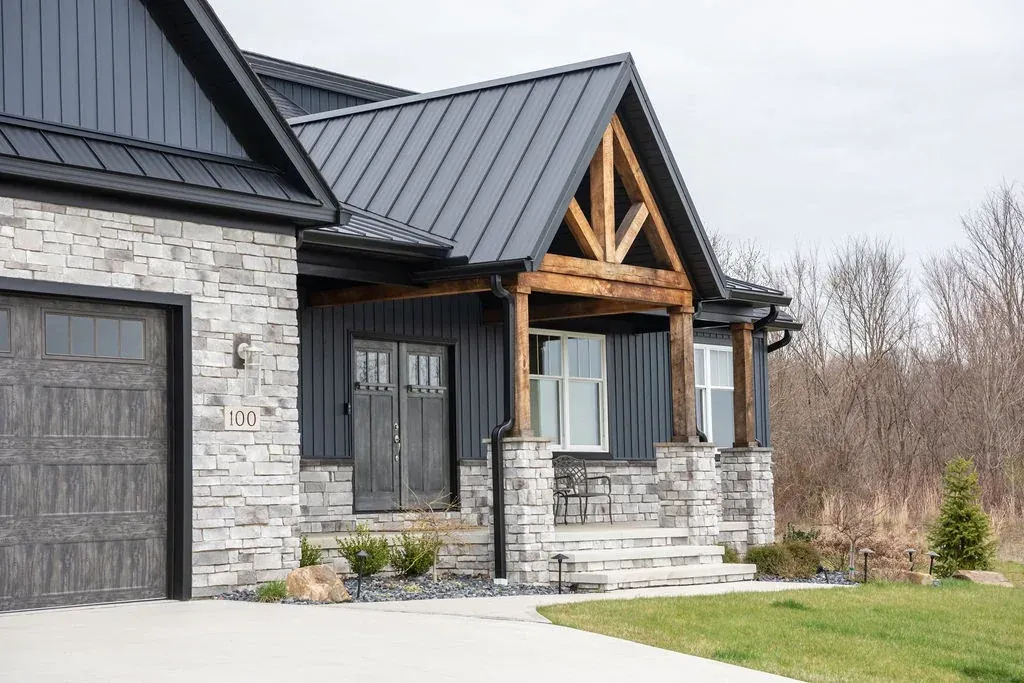
Asphalt shingles are the more affordable choice for most Ohio homeowners. They cost less upfront, typically take just a few days to install, and are relatively inexpensive to repair. Metal roofing costs more initially but can last much longer, potentially outlasting two or three asphalt shingle roofs.
The better choice depends on your budget, how long you plan to stay in your home, and your roof’s design. Metal roofing is generally more expensive on roofs with multiple valleys, dormers, and vents because these features require additional cutting and flashing.
On a simple gable roof, the price difference may be smaller, making metal a more practical long-term investment.
How Each Roofing Material Handles Ohio Weather
Central and North Central Ohio sees roofs go through freezing winters, humid summers, and storm seasons that bring hail and high winds. The two materials respond to those conditions in noticeably different ways.
Metal Roofing
Metal sheds snow and ice, reducing the risk of ice dams along eaves and lower-pitch sections. It is non-combustible and resists wind uplift when fastened properly.
All that shed snowmelt still has to go somewhere, so gutter sizing and placement matter more on a metal roof than on shingles. The weakness, however, is hail: aluminum and thinner-gauge steel can dent, a cosmetic issue that shows most on standing seam.
Asphalt Shingles Roof
Asphalt shingles can handle Ohio’s changing temperatures and repeated freeze-thaw cycles. Over time, however, exposure to hail, heavy rain, and storms can wear away their protective granules, leaving the shingles more vulnerable to damage.
Ohio’s humidity can also encourage algae growth, especially on shaded, north-facing roof slopes. Algae-resistant shingles can help reduce the dark streaks that develop over time.
Cost Comparison
Cost is usually the first question homeowners ask, and the gap between the two materials is wide enough to settle the decision for many budget-conscious owners.
| Asphalt Shingles | Metal Roofing | |
|---|---|---|
| Installed cost (per sq ft) | $4 to $8 | $9 to $16 |
| Lifespan in Ohio | 20 to 30 years | 40 to 70 years |
| Install time | 1 to 2 days | 3 to 5 days |
| Repairs | Individual shingles replaced easily | Panel or seam work, more specialized |
| Insurance impact | Standard | Often qualifies for discounts |
| ROI at resale | Moderate | Higher |
Asphalt wins outright on upfront cost. A full shingle replacement can cost close to half as much as the same roof in metal.
Metal closes that gap by lasting longer than a full asphalt cycle. The break-even point generally falls around the 15-20 year mark, depending on material grade and how long the roof lasts once you factor in ventilation and maintenance.
Maintenance and Repairs
Neither roof is maintenance-free, but the work they require is different, and so does the cost of fixing them.
Asphalt Shingles
Plan for annual inspections, clearing debris from valleys, and replacing lifted or missing shingles after heavy storms to maintain your roof for the long term. Damage usually stays localized, which keeps repairs quick and inexpensive.
Metal Roofing
Metal roofs generally need little maintenance, but upkeep depends on the type of system. Exposed-fastener steel roofs have screws that can loosen over time and may need tightening or replacement. Standing seam metal roofs use concealed fasteners, which reduce this maintenance concern.
However, metal roof repairs are typically more expensive than shingle repairs and often require a roof contractor experienced in metal roofing.
Appearance and Curb Appeal
Asphalt Shingles
Asphalt is the neighborhood standard across most of Central Ohio, so it blends in without drawing attention. Architectural shingles add dimensional texture and come in a broad range of colors that suit most exterior palettes.
Metal Roofing
Metal roofing can give a home a more modern, upscale appearance. Standing seam roofs work particularly well with farmhouse-style homes, modern designs, and rural properties. Metal roofs also come in a range of colors, and high-quality factory finishes resist fading and hold up for decades.
Energy Efficiency and Noise
Two related questions come up constantly with metal, and both deserve a direct answer before you rule it in or out.
Metal reflects solar heat and can reduce summer cooling load, especially in lighter finishes. Solar reflectance and thermal emittance are what drive that effect, though attic insulation and ventilation influence your energy bills far more than the roof surface.
Regarding noise, a metal roof installed over solid decking with proper underlayment is not meaningfully louder in the rain than an asphalt roof. The drumming sound people remember comes from open-frame barn installations, not from residential roofs.
What to Check Before You Hire a Roof Contractor
Even the best roofing material can fail if it isn’t installed correctly.
Before hiring a contractor, ask who will supervise the installation, whether the crew has experience with your chosen roofing system, and what the written workmanship warranty covers. Also, check for manufacturer certifications.
At Hoffman Exteriors, owner Tyler Hoffman personally oversees and inspects each project. We install Owens Corning asphalt shingles, snaplock standing seam, and ribbed steel roofing, and we back our installations with a 10-year workmanship warranty.
Which Roofing Material Makes More Sense for Your Home?
With cost, durability, and upkeep in mind, the decision usually comes down to one of two clear paths.
When Asphalt Roofing Material Makes Sense
Choose asphalt if your budget is tight, you expect to sell within the next decade, your roofline is complex, or you need the job finished quickly after storm damage. It also keeps a home consistent with an established neighborhood look.
When Metal Roofing Option Makes Sense
Choose metal if you plan to stay long-term, want a single roof to last the life of the home, deal with recurring ice dams on lower-pitch sections, or want the insurance and resale advantages.
There is also a middle path. Metal on porch roofs, dormers, or low-slope sections paired with asphalt on the main field gives you the performance where it counts without the full cost.
Still Deciding Between Metal Roofing and Asphalt Shingles?
You don’t have to choose the most expensive roofing material to make a good investment. What matters is finding a roof that fits your home, your plans, and your budget.
If you’re worried about choosing the wrong material, start with a professional roof inspection. A local roof contractor can assess your roof’s condition, explain any installation challenges, and give you estimates for both options. That way, you can compare actual costs instead of relying on general price ranges.