Is James Hardie siding worth the higher price, or would vinyl do the job just as well? For Columbus homeowners, the answer depends on more than the material itself. Ohio’s changing weather, your plans for the home, and installation quality all affect the value you get.
This guide compares James Hardie siding with other siding options, covering costs, durability, maintenance, and what to consider before making a decision.
Key Takeaways
- Best for long-term ownership: James Hardie is worth considering if you plan to stay 10–15 years or longer.
- Higher upfront cost: Expect $10–$16 per sq. ft. installed, compared to $4–$9 for vinyl.
- Built for Ohio weather: HZ5 siding is engineered to resist moisture and freeze-thaw damage.
- Low maintenance: Annual cleaning and inspections are recommended; repainting depends on the finish.
- Proper installation is essential: Flashing, clearances, and fastening help prevent costly moisture damage.
- Budget-friendly alternative: Use James Hardie on visible walls and less expensive siding elsewhere.
Table of Contents
- Is James Hardie Siding Worth It for Homes in Columbus?
- How Well Does James Hardie Siding Hold Up in Columbus Weather?
- Which Siding Offers the Best Long-Term Value in Columbus?
- Maintenance and Upkeep
- Appearance and Curb Appeal
- Proper Installation is Essential for James Hardie Siding: Here’s Why
- What to Check Before You Hire a Siding Contractor
- Is James Hardie Siding the Right Choice for Your Columbus Home?
- Get Expert Advice on James Hardie Siding in Columbus
Is James Hardie Siding Worth It for Homes in Columbus?
James Hardie siding is generally worth it for Columbus homeowners who plan to stay in their homes for at least another decade. Fiber cement siding handles central Ohio’s temperature swings well, with very little expansion or contraction. However, it can cost nearly twice as much as vinyl siding and takes longer to install.
Whether the extra cost pays off depends on how long you plan to own your home, how much exposure your exterior walls get, and the condition of the materials underneath. Even the best siding won’t make up for damaged or deteriorating sheathing.
How Well Does James Hardie Siding Hold Up in Columbus Weather?
Columbus homes face freezing winters, humid summers, and storms that bring strong winds and hail. To handle these conditions, James Hardie developed its HardieZone System, which offers siding engineered for the specific climate where it’s installed.
Columbus falls within the HZ5 climate region, so homeowners get fiber cement siding designed to withstand freezing temperatures, snow, ice, and seasonal temperature changes.
Protection Against Moisture and Freeze-Thaw Cycles
James Hardie’s HZ5 siding is specifically engineered for cold, wet climates like Columbus.
Its moisture-resistant surface helps prevent swelling and cracking caused by repeated freezing and thawing, while a built-in drip edge helps direct water away from the boards. This is especially useful on north-facing walls that receive less sunlight and stay damp longer.
While fiber cement won’t rot like wood, water that gets behind the siding can still damage the underlying sheathing. That’s why proper flashing, weather barriers, and installation are just as important as the siding itself.
Resistance to High Winds, Hail, and Storm Damage
James Hardie siding’s dense, rigid composition makes it more resistant to wind and impact damage than standard vinyl siding. When properly fastened to the wall framing, it can withstand strong winds without easily bending or coming loose. It also holds up well against hail, although severe impacts can still cause damage.
As an added benefit, fiber cement is noncombustible and resistant to damage from termites, other wood-boring insects, and woodpeckers.
Which Siding Offers the Best Long-Term Value in Columbus?
The upfront cost of siding is important, but so is how long it lasts and how much maintenance it needs over the years. Vinyl is the most affordable option, while engineered wood and James Hardie siding cost more but offer different benefits in durability and longevity.
Here’s how the three compare in terms of installation costs, lifespan, maintenance, and long-term value for Columbus homeowners.
| Vinyl | Engineered Wood | James Hardie | |
|---|---|---|---|
| Installed cost (per sq ft) | $4-9 | $8-13 | $10-16 |
| Lifespan in Ohio | 20-30 years | 25-40 years | 30-50 years |
| Repainting | Not required | Every 7-10 years | Every 10-15 years |
| Install time | 3-5 days | 5-8 days | 5-10 days |
| Impact resistance | Cracks in cold, dents | Moderate | High |
| Repairs | Panels swapped cheaply | Plank replacement | Plank replacement, specialized cutting |
| ROI at resale | Moderate | Moderate | Higher |
Maintenance and Upkeep
No siding is maintenance-free, and fiber cement is no exception. Most of the upkeep involves occasional cleaning, checking for damage, and maintaining the paint and sealant where needed.
Routine Cleaning and Inspections
Wash your James Hardie siding about once a year to remove dirt, dust, and mildew. In spring, inspect the exterior for chipped boards, loose caulk, or gaps around windows, doors, and trim. Pay particular attention to areas near the ground, where moisture can collect.
Don’t let mulch and soil near the siding and direct downspout water away from the house to prevent moisture from reaching the materials underneath.
Repainting and Sealant Maintenance
How often James Hardie siding needs repainting depends on its finish. Field-painted siding may need a fresh coat every 7–10 years, while factory-applied ColorPlus finishes typically last longer and resist fading better.
Sealant around trim, windows, doors, and other joints may need attention sooner. Check these areas regularly and replace damaged or deteriorating caulk where the installation details call for it.
Appearance and Curb Appeal
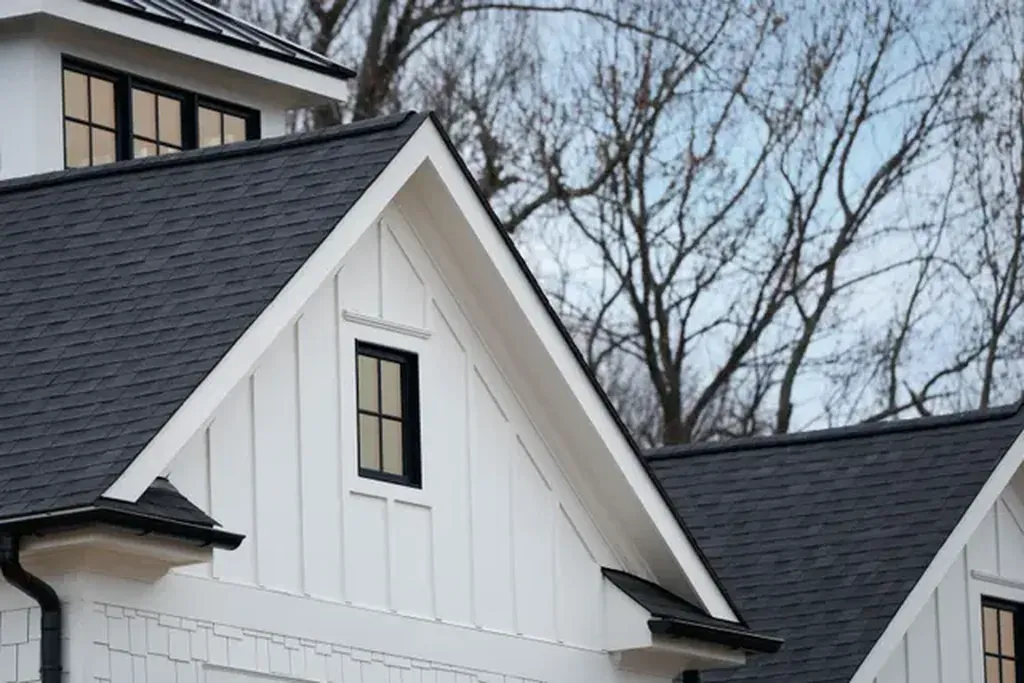
Whether you prefer traditional lap siding or a more modern board-and-batten design, James Hardie Siding offers a clean, finished appearance that can improve curb appeal and complement different home styles throughout Columbus.
Profiles and Texture
Lap siding is the default and suits most Columbus housing stock. Board-and-batten, shingle panels, and smooth or cedar-grain textures open up options for gables, dormers, and accent walls.
Color and Finish
ColorPlus finishes are baked on at the factory and carry a longer finish warranty than site-applied paint. Primed board painted after installation gives you unlimited color choice and a shorter recoat cycle.
Proper Installation is Essential for James Hardie Siding: Here’s Why
James Hardie siding requires specific clearances, fastening methods, and moisture protection to prevent damage and maintain its durability. Knowing what proper installation looks like can help you spot potential problems before they lead to costly repairs.
Proper Clearance, Flashing, and Moisture Protection
James Hardie generally requires at least 6 inches of clearance between the siding and the ground, along with 1 inch above roofs, decks, steps, and other horizontal surfaces.
These gaps keep the boards from sitting in water or absorbing moisture from nearby surfaces. Installers must also leave the specified gaps around trim and seal joints where required.
Behind the siding, a weather-resistant barrier and properly installed flashing around windows, doors, and other openings help direct water away from the wall and protect the sheathing underneath.
Correct Fastening, Cutting, and Sealing
James Hardie siding must be fastened according to the manufacturer’s instructions, using the correct nails, spacing, and approved fastening locations.
For lap siding, blind nailing is commonly used to hide fasteners beneath the overlapping board. Nails driven too deep can damage the siding and weaken the connection, while improperly secured boards may loosen over time.
Installers must also seal exposed cut edges as specified to protect against moisture. And during cutting, they should use appropriate dust-control methods to reduce exposure to harmful silica dust.
What to Check Before You Hire a Siding Contractor
James Hardie siding requires careful installation, so it’s important to hire a contractor who knows how to work with fiber cement.
Start by asking about their experience with James Hardie products and whether they follow the manufacturer’s installation guidelines. Check that they’re licensed where required, insured, and willing to provide references from previous siding projects.
You should also ask who will supervise the work, whether the estimate covers removal of old siding, necessary repairs, flashing, and cleanup, and how long the workmanship warranty lasts.
Remember, the manufacturer’s warranty covers qualifying product defects, while installation problems are generally the contractor’s responsibility.
At Hoffman Exteriors, we install James Hardie fiber cement siding, with Tyler personally overseeing and inspecting the work. We also back our installations with a 10-year workmanship warranty and hold CertainTeed 5-Star contractor certification.
Is James Hardie Siding the Right Choice for Your Columbus Home?
James Hardie siding offers excellent durability, but it isn’t necessarily the best choice for every home or budget.
When James Hardie Siding Is Worth the Investment
James Hardie siding makes the most sense if you plan to stay in your Columbus home for many years and want a durable exterior that can handle Ohio’s changing weather with relatively little maintenance.
It’s also worth considering if you’re already planning a major exterior renovation that involves replacing damaged sheathing, trim, or old siding. Since much of the preparation work is already part of the project, you can invest in a longer-lasting material without having to repeat the process a few years down the road.
When Vinyl or Engineered Wood May Be a Better Choice
If you’re working with a limited budget or expect to sell your home within a few years, vinyl siding may be a more practical option because of its lower upfront cost.
Engineered wood is another alternative if you prefer a wood-like appearance without paying the full cost of fiber cement. Both can be reasonable choices when properly installed.
The Best of Both Worlds
If you want the appearance and durability of James Hardie without siding your entire house, consider using it on the front of your home and prominent gables, then choosing a less expensive material for the sides and rear. This approach can improve curb appeal while keeping the overall project cost manageable.
Get Expert Advice on James Hardie Siding in Columbus
Before committing to James Hardie siding, make sure you understand exactly what you’re paying for.
Ask for an itemized estimate, find out whether your existing walls need repairs, and check what happens if hidden damage is discovered during installation. If the price feels too high, ask about different siding options or ways to reduce the project scope.
At Hoffman Exteriors, we can help you compare your options and understand what makes sense for your home and budget. The goal is to choose siding you’ll be happy with long after the installation is complete.